The Studio Grind vs. The Digital Gallery: Finding a Better Balance

April 15, 2026

Share this article

You know the feeling. You’ve just spent eight hours hunched over a canvas. Your back is a question mark, your hands are stained, and you’re in that sweet, post-marathon glow.


Then you remember: you haven't updated your portfolio in weeks. Suddenly, the glow vanishes. That’s the Studio Grind. It’s time your digital home started pulling its weight so you can get back to the work that matters.

Why the "Digital Gallery" feels like a chore

Most artists feel overwhelmed because their sites are built piecemeal—a plugin here, a random page there. When your tools don't talk to each other, you become the manual translator.


To move from the "grind" to the "gallery," you need to stop viewing your website as a social media feed and start viewing it as a permanent archive. A gallery is a curated space; a grind is a never-ending loop.

3 Ways to Reclaim Your Time

If you want to spend more time with a brush in your hand and less time with a cursor in your palm, start here:

  • Batch Your Admin: Stop the "one-off" upload cycle. It kills your momentum. Set one afternoon a month to photograph, edit, and upload. Be the "manager" for four hours so you can be the artist for the rest of the month.
  • Automate the Gatekeeping: Stop the endless DM tag. Use integrated booking tools to collect deposits and project details automatically while you sleep. If someone wants a commission, they shouldn't have to wait for you to put down the brush to get a price quote.
  • The Three-Click Rule: Clutter kills sales. If a potential collector can’t find your work or your contact info in three clicks, they’re gone. Your site doesn't need more "stuff," it needs more clarity.

Your Site is an Extension of the Studio Floor

Your website should feel like your workspace—not a sterile corporate office. If your studio is minimalist and quiet, your site should reflect that. If your work is loud and textured, your digital space should carry that same energy.


At Plinths, we build digital infrastructure that mimics your real-world workflow. We don’t just give you a generic template; we build a system that understands how creatives actually sell—whether that’s through direct e-commerce or automated email updates that keep your community connected without you having to manualy hit "send" every single time.

Note to the Artist:

The screen isn't the enemy—it’s the frame. A good frame doesn't distract from the painting; it protects it and makes it ready for the wall.

Core Takeaways:

Image Credit: "Roomba Based Relevancy" by Rich Stevens

Recent Posts

March 27, 2026
In today’s evolving art landscape, artists face an important decision: how to present their work effectively. Should you rely on a digital portfolio, a physical portfolio, or a combination of both? This article explores the key differences between digital and physical portfolios, outlining the advantages and limitations of each. By understanding how these formats function, artists can make informed decisions that improve visibility, strengthen their brand, and support sales.  Research highlights that an artist’s portfolio plays a central role in shaping their online identity, brand presence, and ability to connect with audiences.
March 26, 2026
In today’s landscape, an artist’s website is more than a portfolio. It’s how your work is experienced, understood, and ultimately engaged with. A well-built site does more than display images. It creates clarity around the work, makes it easy to navigate, and supports how people discover and purchase it. Many artists struggle with this balance. Sites often end up either visually strong but difficult to use, or functional but disconnected from the work itself. This guide focuses on how to build a website that does both — present your work clearly and support real engagement and sales. 
Two people walk through the open door of an art gallery titled
March 24, 2026
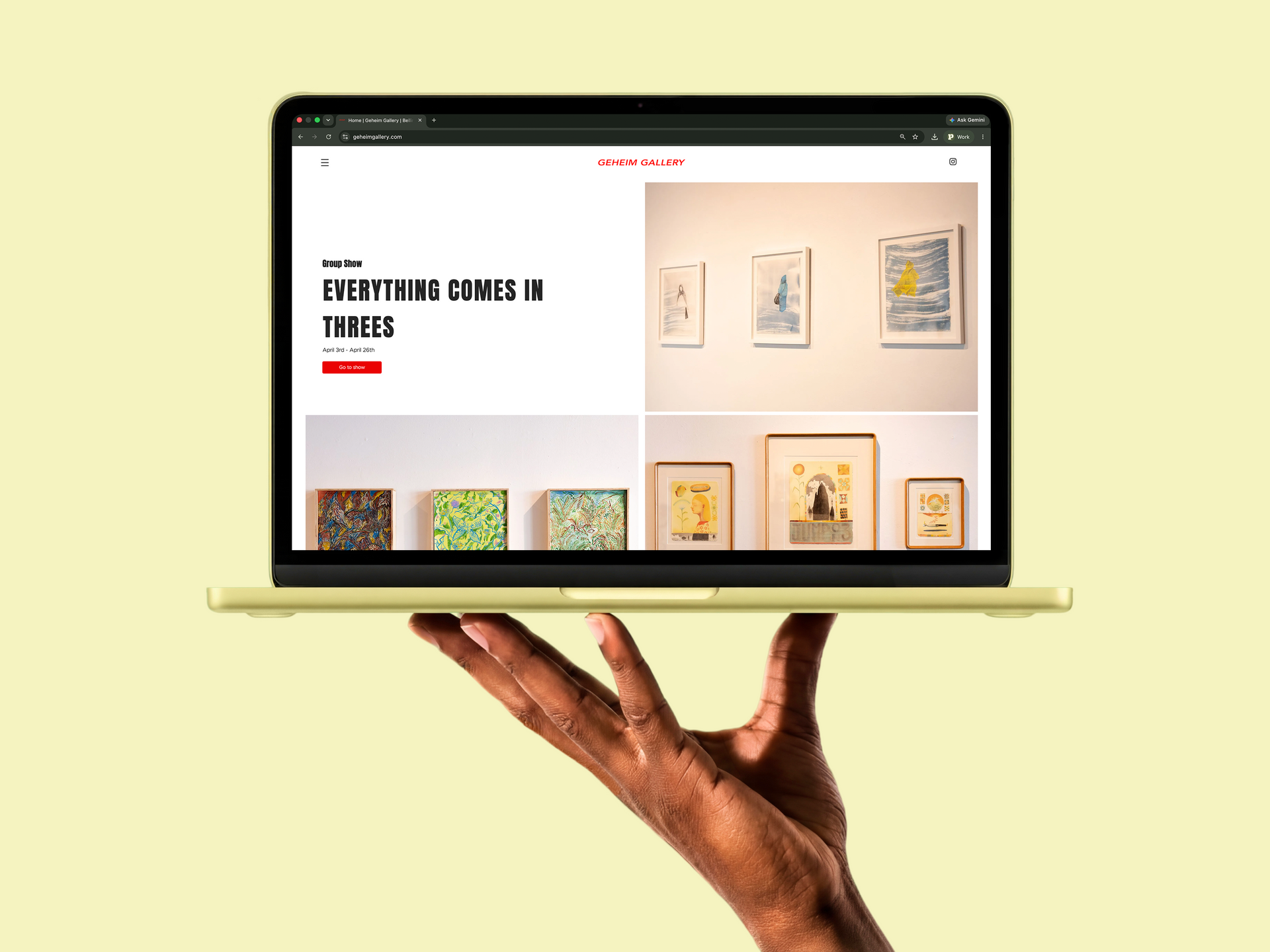
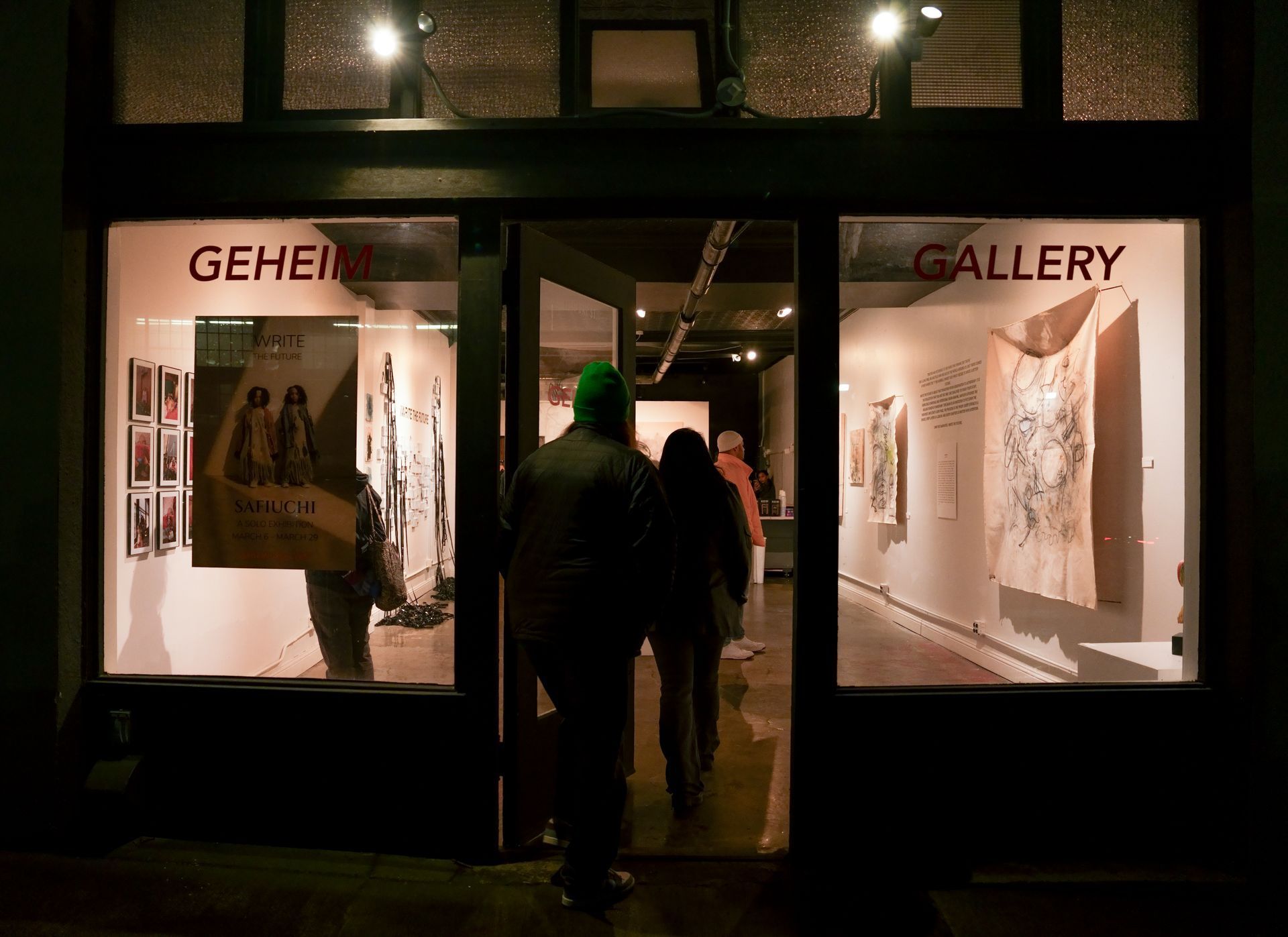
We’re excited to collaborate with Geheim Gallery . Galleries play an important role in how artwork is experienced, understood, and shared. They create context around the work, support artists in meaningful ways, and bring people into direct contact with what’s being made. Geheim is one of those spaces. Their program reflects a thoughtful approach to both artists and audience, creating exhibitions that feel intentional and grounded in the work itself. 
Two figures sit against a vibrant red background in this diptych, rendered in bold, abstract patterns of pink and blue.
March 24, 2026
There’s a quiet part of building a creative practice that no one really talks about. It’s the part where nothing feels like it’s happening. Where you’re doing the work, but not seeing the result yet. So you tell yourself things. That the gallery will respond. That the grant is coming. That someone important has already seen your work. Some of those things are true. Some of them just help you keep going. This is a small version of that. Slowed down, a little soft, and very real.
A rectangular artwork by Ariel Parrow with a light blue background and the words
March 17, 2026
Selling art online has become an essential avenue for artists to reach a broader audience and generate income. With the rise of digital platforms, artists can showcase their work, connect with potential buyers, and manage sales from the comfort of their homes. This article will explore effective strategies for selling art online, including choosing the right platforms, pricing strategies, marketing techniques, and the importance of community engagement. By understanding these elements, artists can enhance their online presence and maximize their sales potential.
A tablet displaying the Plinths webpage, two small product boxes, and dried flowers on a white round table over a green rug.
March 11, 2026
Selecting the right website builder is crucial for artists who want to showcase their work and sell online. With so many platforms available, it can be difficult to determine which option best fits your needs. This guide covers the essential features artists should look for when choosing a website platform, including design flexibility, e-commerce tools, SEO optimization, and pricing structures. Understanding these factors will help you make an informed decision that strengthens your online presence and supports your creative practice. Research consistently shows that an artist’s website plays a critical role in establishing online identity, branding, and e-commerce functionality.